
Kentucky Arrest Records Access Rules
Kentucky starts from a simple premise. Records kept by public agencies are open to inspection or copying. A statute must shield them to close them off. The Kentucky Open Records Act, KRS 61.870 through 61.884, builds that framework. The right covers records that already exist. No agency has to build a new database. It need not create a statewide arrest list or answer a sweeping research question. Name the record, name the agency, and give enough facts to locate the item. That is how a request succeeds.
The phrase "arrest record" covers a lot of ground. A county jail can show who was booked or held in custody. A police agency may hold the incident or arrest report itself. A court file tracks the charge and any later amendment. A custody service reports transfers and releases. Each record has its own custodian and its own disclosure rules. An online result reflects one source only. It is not a single official account of every stage.
Kentucky Arrest Record Requests
The Open Records Act, KRS 61.870 through 61.884 sets the access rules. It covers Kentucky arrest records. KRS 61.872 covers the request right, and KRS 61.880 spells out response duties. A custodian reviews the request, finds matching records, and applies any exemptions the law allows. Ask for an existing incident report or booking photo. That works far better than asking an office to investigate someone or write a new narrative.
Kentucky State Police accepts written requests several ways. Options include an online portal, email, mail, fax, and hand delivery. Say which agency record you want. Add helpful details such as a date range, county, location, post, case number, or name. Remember that KSP may not hold the receiving jail's custody screen. Direct the request to the agency that actually keeps the record.
Timing works like this. KRS 61.880 generally gives an agency five business days. Weekends and legal holidays are excluded. The window covers making a compliance determination and notifying the requester. That deadline is for the decision. It does not guarantee delivery of a complex, active, or multi-agency file within five days. The outcome may be release, full denial, or release with exempt details removed. KSP charges ten cents per released page plus separate media fees for photographs, disks, or video. Other custodians set their own fees and methods. Check the current page of the agency holding it.
Open status does not force everything online. A custodian can redact protected personal information, confidential source details, or material tied to an active investigation. The rest can still be released. Whether the public may inspect a record is one question. Whether a vendor displays a field is another. A roster with no photo or charge detail proves nothing. The agency may still hold a record that answers the question.
Kentucky Arrest Photo Law
KRS 61.8746 is a Kentucky statute aimed squarely at mugshot pay-for-removal sites. It governs the commercial use of a booking photograph or official inmate photograph. The image must come from a public agency. The law applies when a publication uses such an image for a commercial purpose. It also reaches sites that remove the picture only after a fee or other consideration. The statute spells out which photographic records count. It defines commercial purpose as well. News reporting and information programming are excluded.
The rule stays narrow, though. It does not ban publishing every booking photo. Nor does it make arrest images confidential across the board. It does not erase an agency's public-record duty either. What it targets is the specific practice of demanding payment to take a qualifying image down. A publisher's no-fee correction policy can help a person. That policy sits apart from the statutory right. It promises nothing about every copy disappearing.
The General Assembly passed the measure through 2016 House Bill 132. It is now 2016 Kentucky Acts chapter 101, section 1. The bill's history shows the claim moving to Circuit Court. It added escalating daily damages. It folded official inmate photographs in alongside booking photographs. The current statute controls, not an earlier bill summary. No reported Kentucky appellate decision construes KRS 61.8746. That says nothing about whether suits have been filed.
The statute also gives remedies. A person may bring an action in Circuit Court for an injunction or other appropriate relief. The person may also recover costs and reasonable attorney fees. A court can award damages for a separate violation at $100 per day for the first 30 days. That climbs to $250 per day for the next 30 and $500 per day after that. These are litigation remedies, not an automatic state takedown service. No outcome should be promised without advice on the specific facts.
Kentucky Juvenile Arrest Records
Kids' cases run on separate rules. Kentucky's KRS Chapter 610 governs juvenile court records. Both KRS 610.320 and KRS 610.340 limit access. Who may see a record can turn on the child's status, the requester's legal role, the record type, or a court order. Official-use exceptions stay narrow. They never turn a juvenile delinquency file into an ordinary public roster. A child missing from a public booking page proves nothing, and an arrest site should never identify a child through a photo.
Restrictions reach beyond juvenile files. Limits apply to juvenile delinquency and nonconviction data. An agency may also withhold or redact investigative material, victim information, sealed or expunged information, confidential personal details, or other protected content. Inspecting one public record never opens the whole file.
The difference matters when records disagree. A jail screen can show a booking while the court case is not yet available. Later, a court file may show a changed charge or a dismissal. A police report and a jail entry may sit with different offices. A blank field means the source shows nothing. That gap never proves the event or record never existed.
Kentucky Arrest Record Locations
Start with the source that fits the question. County jail rosters and short-window booking feeds deal with booking and custody. Their fields and public display rules vary by county. State police news releases cover selected agency announcements, not every arrest. A court search can tie a case to later charges and outcome. It is not a jail photo archive. The statewide overview of official routes sits on the Kentucky arrest and mugshot page. It also maps photo publication patterns. The KSP arrests page explains Kentucky State Police publication and request channels.
- Identify the event and likely record: a jail booking, a police incident, a custody transfer, or a court case.
- Use the county jail source for a current booking or custody entry; roster windows and photo fields are not uniform statewide.
- Ask the agency that made or received the record for a specific copy if the online view is absent or too brief.
- Check the court record separately for a case number, amended charge, or disposition, and confirm the court is the official source.
A statewide arrest search cannot replace source checks. Kentucky's CourtNet offers case activity across the state's counties. The clerk stays custodian of the official court record. An arrest lead and a case disposition are related but different records. Old roster entries and news stories are not final outcomes.
Kentucky Arrest Record Expungement
Expungement is a court-ordered process that can remove or restrict eligible official Kentucky records. Sealed records are not gone. Courts and authorized agencies can still reach them. What gets cut off is ordinary public inspection. A dismissal is simply a case outcome, so it does not by itself wipe the arrest record. Start with the current Kentucky Court of Justice Expungement Certification Process and its official forms, then confirm eligibility under the governing statute before filing.
Felony relief runs through KRS 431.073. It covers eligible Class D and other qualifying felony convictions. The usual wait is five years. That clock starts after the sentence ends or probation or parole succeeds, whichever comes later. Some offenses are off the table entirely. Sex offenses, crimes against children, certain DUI-related offenses, abuse of public office, and cases involving serious injury or death are excluded. The Commonwealth has 60 days to respond, and a court can hold a hearing that requires proof of rehabilitation and a finding that relief serves public safety and justice. Fees are fixed by statute: $50 to file and $250 once an order issues.
KRS 431.078 handles the smaller cases. Misdemeanors, violations, and traffic infractions can be petitioned. Certain dismissed or amended charges qualify too. The wait is generally five years after sentence completion or successful probation, whichever is later. Statutory exclusions and look-back rules still apply. Use current forms. Anyone claiming all misdemeanors clear after five years is oversimplifying, since eligibility turns on the offense and the person's record.
KRS 431.076 opens a third door. It covers qualifying acquittals, dismissals, and charges that never reached an indictment or information. The Court of Justice says dismissals with prejudice and acquittals on or after July 15, 2020 can be automatically expunged after 30 days. Conditions, traffic-case limits, notice, and objection rules still govern. Notices go out widely. The person or counsel, the prosecutor, KSP, the arresting agency, and the local jail all receive them, and KSP passes word to federal agencies. Even so, it is not automatic erasure of every Kentucky arrest in every situation.
Kentucky Arrest Expungement Process
Official paperwork starts with the courts. The Court of Justice legal forms page carries the current expungement forms. Its expungement certification page explains the official Kentucky route. Statutes, eligibility, and agency notice all connect there.
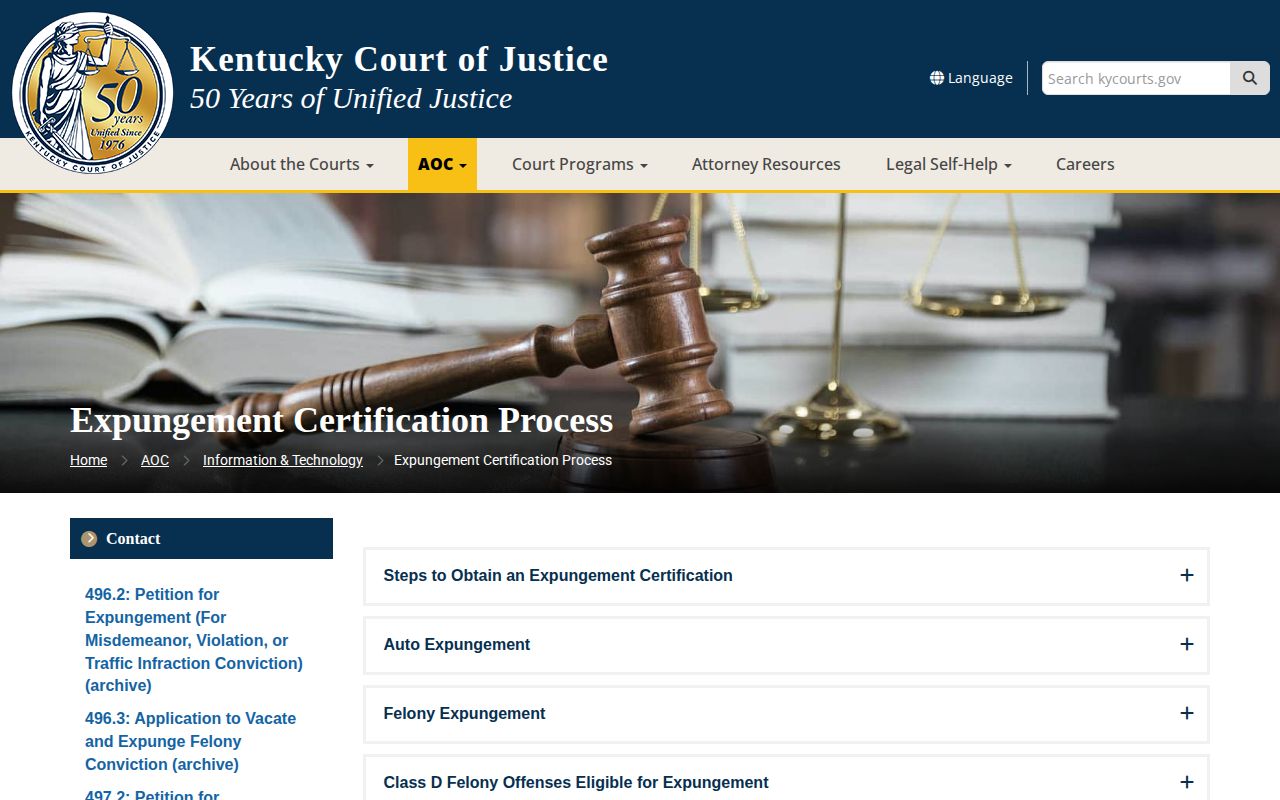
Treat certification as a first checkpoint. A court order covers the official records it names, so separate public copies need their own follow-up.
Kentucky Arrest Court Forms
The Kentucky legal forms collection holds current court forms used in expungement proceedings.
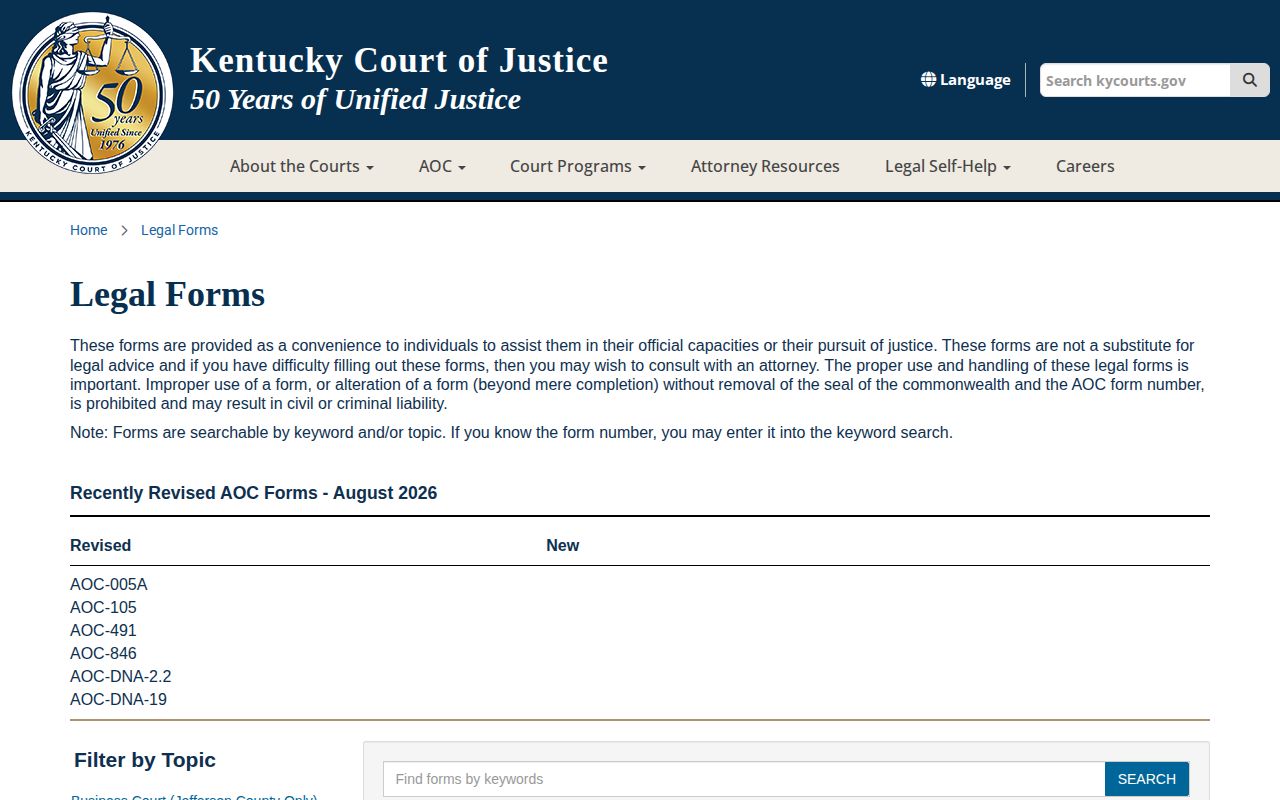
Old copies cause avoidable mistakes. Filing steps and eligibility still turn on the statute and the facts of each case.
Correcting Kentucky Arrest Copies
An expungement order binds only the parties named in it. The official Kentucky process sends notice to agencies that may hold the booking or arrest record. Covered agencies must update their systems. That can reach a jail's booking photo or an arresting agency's file. It cannot command search engines, news stories, social posts, or third-party archives that copied the material on their own. Those copies live outside the court's reach. They follow their own rules.
Corrections elsewhere usually start with a request. RecentlyBooked charges nothing and accepts requests involving dismissed, expunged, sealed, incorrect, outdated, wrong-person, juvenile, or duplicate material. It asks for the listing URL and supporting details. Its policy controls the outcome, and accurate current public information does not come down just because someone asks.
The policy page spells out the no-fee route and what the publisher may review. Those rules sit apart from the court process. No outcome is promised.
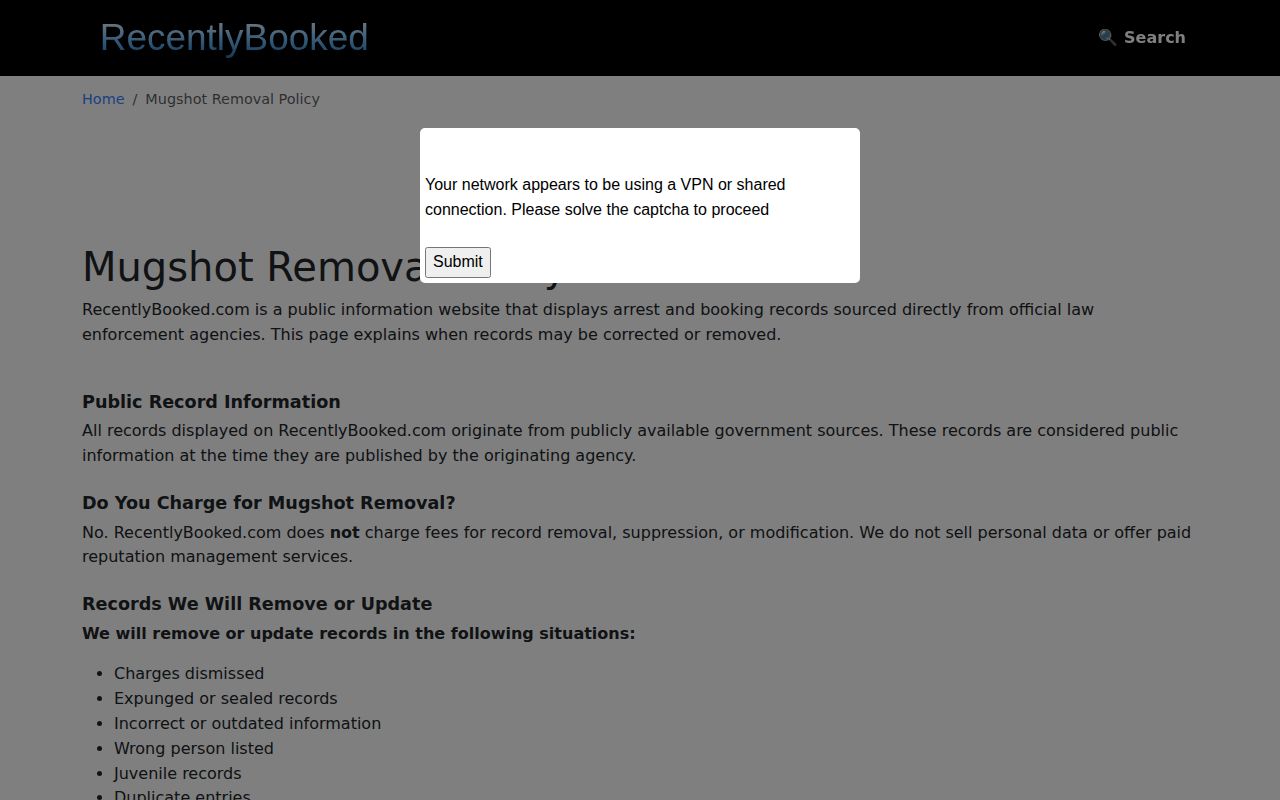
That policy covers one publisher's free request route. It changes no court order and controls no other copies.
Kentucky Arrest News Corrections
Busted Newspaper offers a free removal form. The policy asks for the listing URL and supporting legal records. Reviews usually take five to ten days. The publisher calls that an estimate rather than a guarantee. A court order or disposition can strengthen a request. Still, no private policy substitutes for a statutory remedy. Kentucky's KRS 61.8746 covers only the narrow condition it describes, not every publisher or editorial article.
Newsrooms play a different role. An outlet may correct an error or consider an update. No outlet advertises an automatic photo-removal promise. LEX18's Moving Forward page lays out a free appeal route for some older or resolved stories. Include the exact story link and any court documentation. Send it through the outlet's current contact process. Editorial review never forces a truthful report to come down.
Other publishers keep their own copies. Mugshots.com's record-maintenance page describes a no-fee review for certain documented court outcomes. The Arrests.org Kentucky page is a secondary county index. It lists no verified statewide free opt-out. Mugshots.zone's Boone contact route covers one county only. No central Kentucky opt-out policy stands behind it. Each request affects that publisher's copy alone, never the agency record or every other site.
Search results are a separate matter. Google's outdated-content refresh guidance can update a result once the source page has changed or disappeared. It will not delete the source page. Nor does it prove a court outcome or replace an expungement order. Be wary of anyone selling universal deletion. A publisher's free correction policy never guarantees removal of every independent copy. KRS 61.8746 speaks specifically to the case where a covered commercial image is held back until removal consideration is paid.
Kentucky Arrest Record Retention
A roster's visible window is not an agency's retention period. Kentucky State Police follows a record-series schedule. A jail can rotate an entry off its recent-bookings page long before the underlying record is destroyed, and the schedule grants no personal right to erase a record ahead of its approved lifecycle. Retention and display answer different questions.
The KSP retention schedule lists a “Mug Shot File” series with a stated agency retention period of 20 years and access restrictions under other statutes. That is a records-management entry, not a public online archive. It does not prove every image is still findable. Historical prison registers at KDLA can describe a person, sentence, county, and discharge. They are not a statewide collection of arrest-day photographs. A strong request names the likely agency, county, record type, person, and date range.
Offline records go through KDLA's Records Requests page. The Archives Research Room mail route is P.O. Box 537, 300 Coffee Tree Road, Frankfort, KY 40602. The published fee is nonrefundable. It runs $20 for in-state research and $25 out of state, with added charges possible for scans, copies, postage, or tax. KDLA estimates four to six weeks per request. That is archive work, not a same-day arrest lookup.
Kentucky Arrest Archive Requests
The KDLA Records Requests page lists the current online and mail routes. Fees and timing details appear there as well. Treat the estimate as planning guidance only, since the Archives must still locate the right series and see what survives.
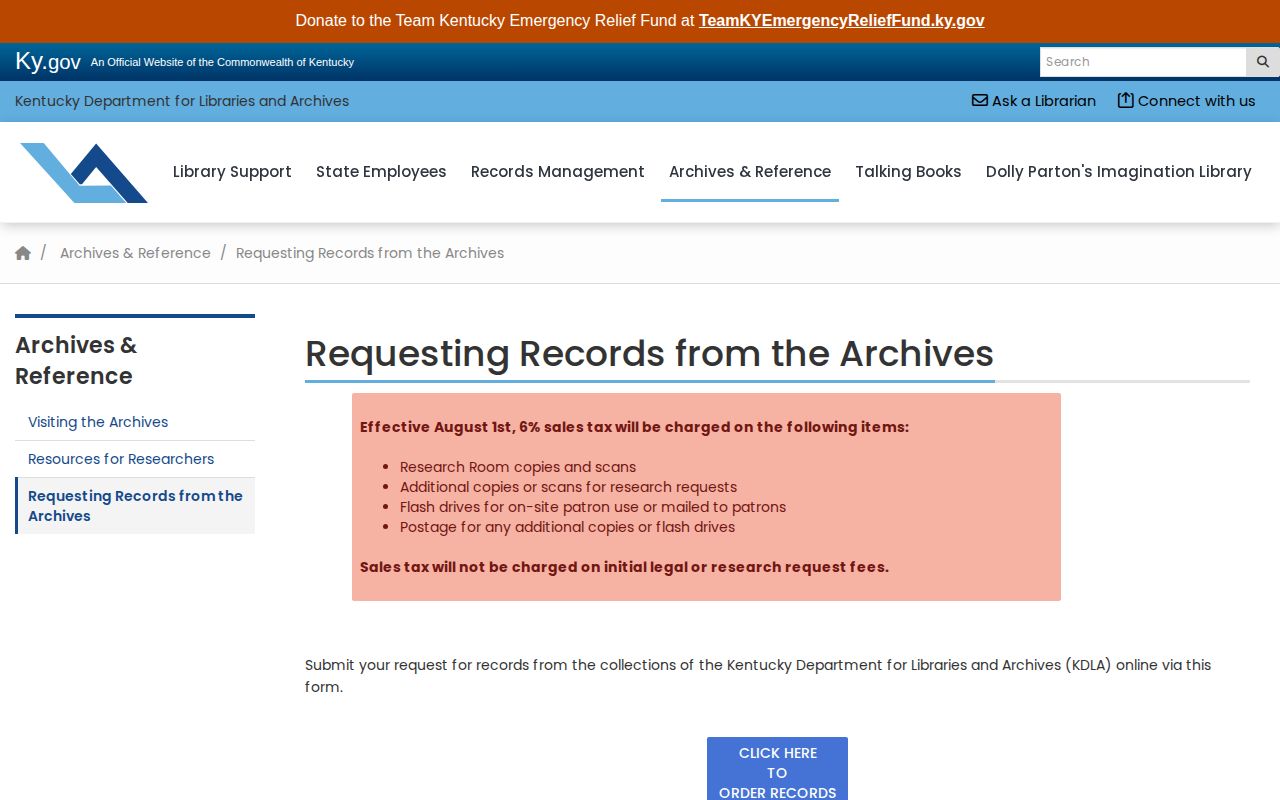
KDLA explains how to request an archive search. It holds no statewide digitized booking-photo run. Court records route through a county Circuit Court Clerk, while older state records may need staff assistance. A prison register is not always an arrest-day record. A county named in an old archive can mark the county of conviction rather than the place of booking.
Keep expungement orders and retention schedules separate. An order targets named official records and agencies. A schedule governs how long an agency keeps a series and when it may be destroyed. A third-party copy calls for its own correction request. These systems answer different questions, and none works as a single statewide deletion switch.