
Kentucky Recent Arrests
No single public feed lists every arrest in Kentucky. City police, sheriffs, KSP, and other agencies all make arrests. The booking entry usually lands with the county or regional jail that received the person. A KSP release covers selected agency activity. A jail roster shows a local booking or custody status. Court and corrections records track later stages.
County systems vary widely in time windows, search fields, and photo rules. Some show current custody only. Some keep short booking-date views. Some display images and some do not. A missing name or photo can reflect timing, a transfer, spelling, local policy, or a restricted record rather than the absence of an arrest. Start with three questions: where the arrest happened, where the person was taken, and what you actually need, whether a fresh booking, current custody, a court result, or an older record. Each answer points to a different system.
KSP Releases Are Not Counts
Kentucky State Police (KSP) works statewide through troops and posts. Public affairs releases may cover investigations, arrests, DUI or checkpoint results, missing people, and fugitive notices. Treat these as selected updates. They are not a real-time arrest list. They are not a county jail roster either. An empty search means little by itself.
State crime and traffic data answer a different question than a jail count. They may measure offenses, crashes, citations, or an enforcement effort. Annual bookings are something else. Kentucky publishes no single statewide booking total. So no annual arrest figure or "busiest county" ranking follows from it. Neither number substitutes for the other.
A KSP release, a county booking, a VINE result, and a court disposition are separate records. Each lives in a different system. KSP can hold the incident report while the receiving jail holds the booking entry and photo. A person arrested in one county may be booked into a jail elsewhere under local arrangements.
Note: A KSP release describes selected agency activity, not proof that the receiving jail posted the matching booking at the same moment.
Find Arrests Across Kentucky
Start with the place of arrest. Then confirm where the booking happened. A city arrest does not guarantee a city jail record. KSP arrests also route into county or regional jails, and a person may move again later. Check the county roster first. Then call the jail or records unit when the online list is unclear.
- Identify the city or county of arrest. Ask the arresting agency which jail received the person.
- Open that county's local arrest page and follow its official jail or sheriff link. Check whether it shows recent bookings or current custody.
- Compare the name with other fields, such as age, booking number, or date. Similar names can cause a false match.
- If a fresh booking is absent, contact the receiving jail or arresting agency. Intake, transport, transfer, or data lag can delay the view.
- Search the court for a case outcome. Use the corrections or federal locator only when the question concerns those custody systems.
The Kentucky County Directory sorts sources county by county. The statewide Daily Arrest Report page covers confirmed short-window examples and their limits.
Kentucky Booking Windows
A "recent arrest" label tells you nothing about how far back a page reaches. Kentucky has a few defined short windows. Many current-custody lists offer no dependable booking-date filter at all. Read the posted window as written. Do not call every roster a 24-hour feed. And do not assume an update schedule the agency never published.
| Observed source | Published window | What the view establishes |
|---|---|---|
| Fayette County / Lexington | “Booked in the Last 48 Hours” | The official short-window view has an Image field and may show expected release information when supplied. It is not a literal 24-hour list. |
| Christian County Jail, also used for some Trigg routing | “Books 24hr” control | The interface may show a booking detail image. It does not publish a statewide update or retention standard. |
| Letcher County Jail | 24-hour bookings control | A short-window view can be available even when public historical browsing is disabled. |
Other counties rely on current-custody tables, JailTracker, Cadmus, or sheriff-hosted pages, each with different fields. A date filter may be missing even while a person stays in custody. Weekends and holidays can slow updates. There is no statewide posting clock. Read the page label, and call the jail if the event seems too new to appear.
Photo fields vary too. Fayette lists an Image field. Christian and Letcher details may show a supplied photo. Other rosters omit photos, show a detail icon, or suppress the image. A missing photo does not mean none exists. The jail may not publish it, the vendor may not have loaded it, or the record may fall outside the window or be restricted.
Kentucky Booking Record Fields
Kentucky has no single statewide booking form. These fields describe Fayette's last-48-hours roster when supplied, not a template every county must publish.
| Field in the Fayette view | What it can show |
|---|---|
| Full name | The name attached to the public roster entry; check other supplied details before treating it as a match. |
| Inmate ID | A local identifier for the jail record, not a statewide person number. |
| Date of birth | An identity field displayed by that interface. |
| Race, sex, height, and weight | Physical descriptors shown in the view when recorded and published. |
| Image | A booking photo field, when the jail supplies and displays an image. |
| Expected release | A projected date when the source provides one. It can change and is not proof that release occurred. |
The roster is a public interface, not the full booking or incident file. A jail may keep the record after someone leaves the current-custody view. If a field is missing, say "not shown in this source." The absence is not proof that no record exists.
New bookings enter a short-window feed after intake. A current roster reflects people still held. After release, the name drops off the list. The booking report or photo stays with the agency, subject to access rules. A state sentence belongs in the corrections system.
Note: These fields reflect Fayette's interface, not a statewide template or a promise that every jail shares the same details.
- Booking
- The intake process that records a person after an arrest. The local jail creates or maintains the booking entry.
- Disposition
- The court's recorded outcome or current result in a case. It can change as the case moves.
- Expungement
- A court process that directs the official record trail to be removed or restricted when legal conditions are met.
Request a Kentucky Arrest Record
Missing a photo? Go to the record holder. The receiving jail keeps the county booking entry and any jail photo. KSP holds the arrest or incident report, and a request there is separate. Include details that narrow the search. Give a name, date, case number, county, location, or post. An agency will not build a statewide list or settle a legal question for you.
- Choose the holder: the receiving jail for a booking or custody record, KSP for its own incident or arrest report.
- Describe the record. Give a date or range, place, case number or post if known, and state whether you seek an entry, report, or photo.
- Send a written KSP request through its Open Records Requests process. The page lists portal, email, mail, fax, and hand-delivery options for the official custodian.
- Review the response and fee notice. KSP lists $0.10 per released page, with separate media charges for photos, video, disks, or similar items.
KRS 61.880 gives an agency five business days, excluding weekends and legal holidays, to decide and notify the requester. That deadline is only for a decision. A complex file may take longer to produce. An active investigation, sealed record, or juvenile matter can bring denial or redaction instead. Local jail fees may differ from KSP's charges.
Kentucky Arrest Law and Photos
Kentucky's Open Records Act, KRS 61.870 through 61.884, governs access to nonexempt records held by public agencies. KRS 61.872 grants a request right. Release still depends on the record. Juvenile, sealed, confidential, and active-investigation material may be withheld or redacted. The photo rule is KRS 61.8746, enacted in 2016. It targets a commercial publication that takes a booking or official inmate photo from a public agency and then demands a fee or other value to remove it. The statute bans no publication outright. Deletion on request is not required. A Circuit Court action can seek an injunction, costs, attorney fees, and possible damages. Those remedies come from a court, not an automatic agency takedown.
A booking photo captures one step in the process. It documents a jail booking after an arrest. The rest of the case file sits with the court, and details like charges and outcomes live there rather than in the photo itself.
The measure began as 2016 House Bill 132. A no-fee correction process sits outside it, and no private service can promise that every copied photo will vanish.
Kentucky Mugshot Copies After Expungement
Adult expungement runs on court orders and certifications. The Court of Justice Expungement Certification Process posts the current forms, eligibility rules, fees, and filing steps. Timing depends on the offense. Qualifying felony petitions may wait five years after sentence completion or successful probation or parole, whichever comes later. Misdemeanors, violations, and traffic matters carry their own conditions and generally a five-year wait too. Some cases need no petition. For qualifying dismissals with prejudice or acquittals on or after July 15, 2020, Kentucky describes an automatic path after 30 days. Others still require a petition and order. Once issued, an order directs the court and named agencies to update covered records. Juvenile files follow separate confidentiality rules. A child's absence from a public roster is no reason to seek or share the child's identity. An order does not reach every copy. A news story, search cache, screenshot, or secondary site may need its own correction. RecentlyBooked's policy covers no-fee requests for qualifying dismissed, expunged, sealed, incorrect, outdated, wrong-person, juvenile, or duplicate records. It asks for a listing URL and supporting details. Accurate public information stays up.
Kentucky Arrest Copy Corrections
Save the URL and court papers first. Ask the official custodian to apply the order, then use any published no-fee route for a copy that remains. A search engine can refresh its result once a source changes. It cannot delete the source page. Skip anyone promising total erasure. Busted Newspaper's no-fee form asks for a listing URL and legal documents, and the publisher says reviews generally take five to ten days without a guarantee. Mugshots.com offers a free maintenance path for eligible court outcomes with judge-signed proof. That route can take up to ten business days. Arrests.org has no statewide free opt-out. Mugshots.zone posts no central removal policy. A newsroom may correct a factual error yet keep an accurate story even after a case changes. Note: An official expungement order updates the named agency record trail, while copied publisher pages need their own review under each current policy.
Kentucky Mugshot Sources
Start with the official systems. County jails keep their own booking and custody entries, while KSP releases selected activity, VINELink reports covered custody events, CourtNet follows a case, and KDOC covers state corrections or supervision. No shared statewide database answers all four questions.
| Source layer | Record or event covered | What it cannot establish by itself |
|---|---|---|
| County jail roster or booking view | New booking or current local custody, depending on the page. | A statewide list, a final court result, or a uniform photo policy. |
| KSP public release | Selected enforcement, investigation, or public-safety news. | Every KSP arrest or every county booking. |
| Kentucky VINE / VINELink | Custody status and alerts when the record is included in the service. | A complete booking history or a court disposition. |
| CourtNet | Public court-case information and a displayed disposition. | A jail roster or booking photograph. |
| KDOC / KOOL | State corrections or supervision records, with a photo when available. | A current county-jail booking or a new arrest by itself. |
| BOP or ICE | Custody in the applicable federal system. | A Kentucky county booking or a complete federal arrest history. |
| Secondary publishers | Copied or archived arrest information with varying county coverage. | Current official custody, a confirmed identity, or a final case outcome. |
Secondary publishers can surface copied records and longer archives, but their scope is uneven. RecentlyBooked's Kentucky section describes an approximately 30-day county view, with partial rather than confirmed 120-county coverage and update rates that vary. Treat each name as a lead. Confirm it with the jail.
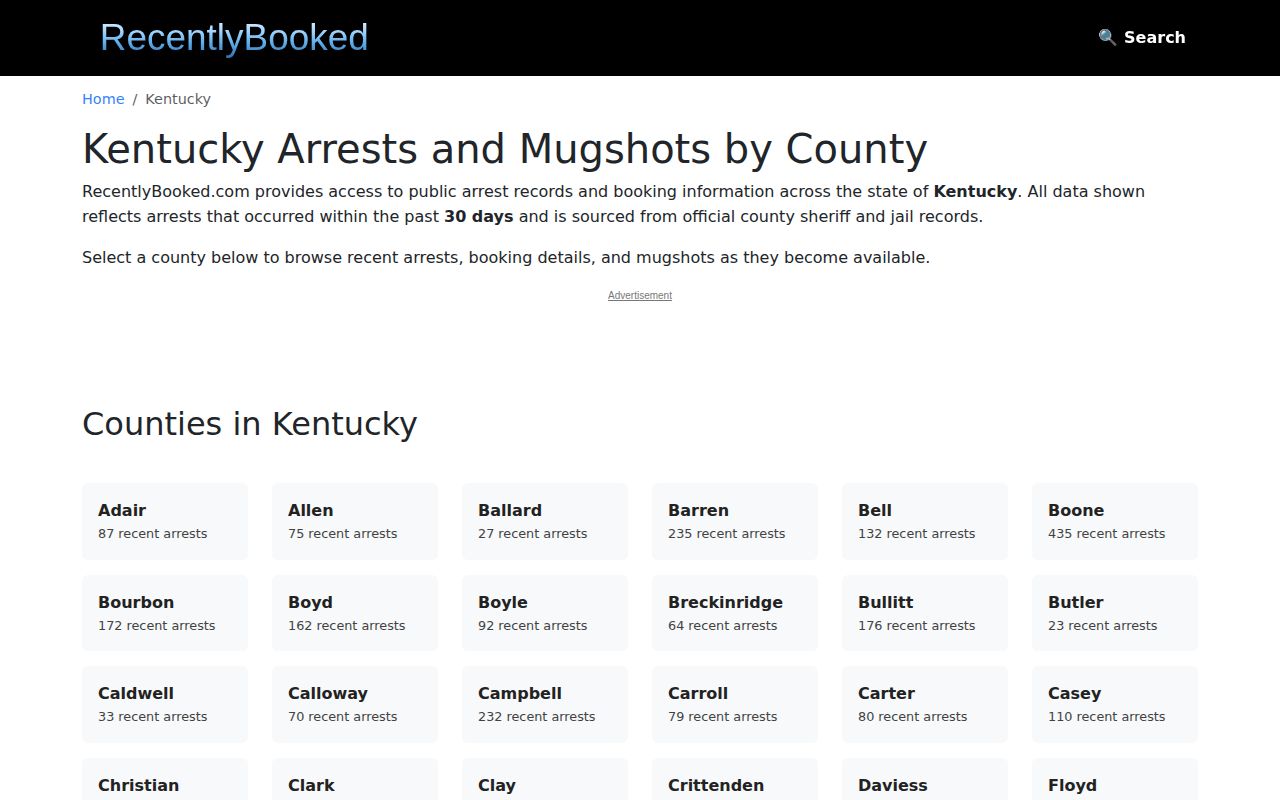
The display is a publisher's county index, not a government roster. It can be incomplete or stale. Verify each name and custody status with the originating agency.
Kentucky Arrest Publishers and News
Mugshots.com Kentucky is an archive-style index, not a same-day jail feed. Busted Newspaper organizes county material, and Arrests.org and county Mugshots.zone pages also vary by county and date. Treat each as an unverified copy. Confirm it with the jail or court.
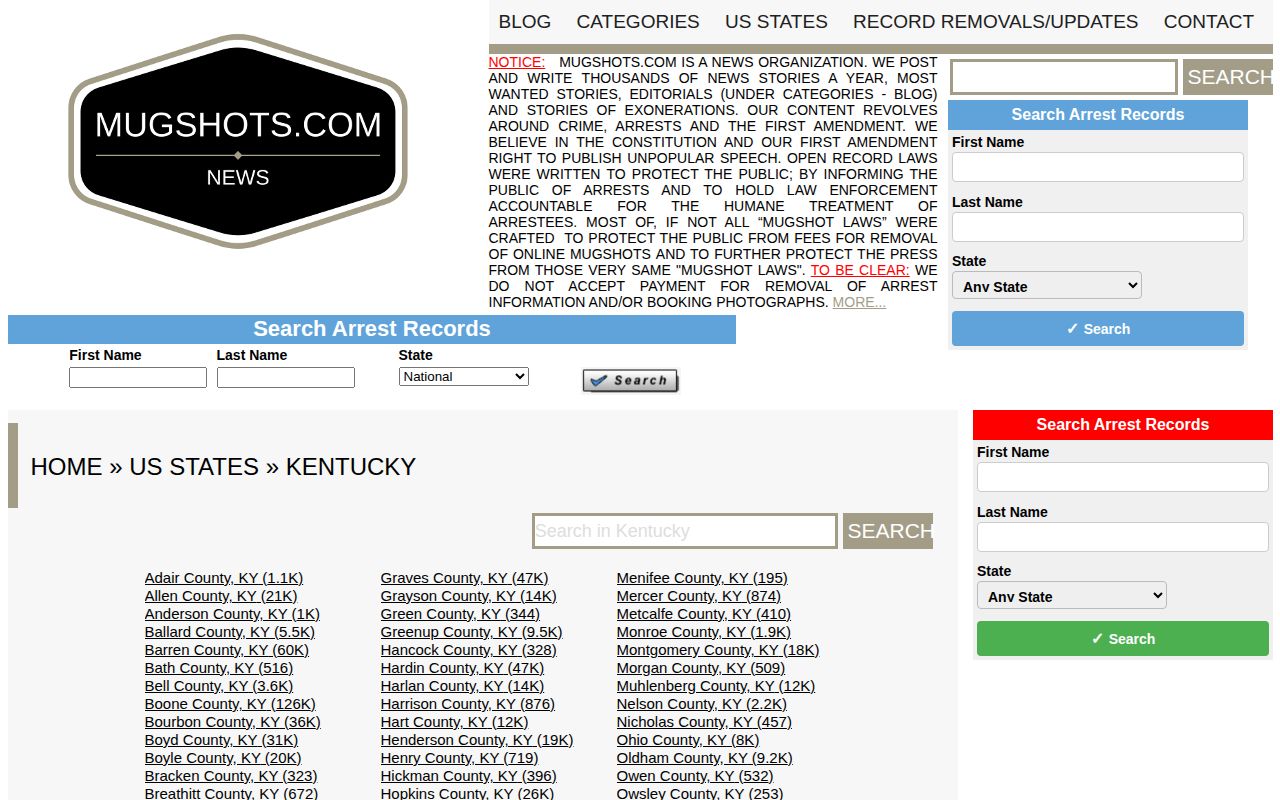
Mugshots.com is a private archive, not a Kentucky booking system. A copied entry can linger after the county roster updates. Case details may change without any notice. The Busted Newspaper Kentucky page groups county booking cards. The Arrests.org Kentucky page links counties plus a yesterday-bookings view. Arrests.org lists no statewide free opt-out. Mugshots.zone's Kenton page covers one county only. Its contact rules differ from other county sites. All of these are secondary publishers. An entry can be stale or incomplete, so treat none as a custody authority.
Regional newsrooms report selected arrests, indictments, warrants, and police releases. Examples include WKYT, WDRB, LEX18, WHAS11, WAVE 3, and Kentucky.com. They run no statewide roster. Their free correction routes can fix factual errors. A later case change does not erase an accurate article, though. Confirm custody with the jail, and a case result with the court.
Kentucky Warrants and Wanted Lists
Kentucky State Police publish no statewide most-wanted roster. KSP announces fugitive matters in selected news only. A complete warrant list is not exposed to the public. The Kentucky Department of Corrections KOOL search can show an absconder or escape status when configured. That is a corrections record, though, not warrant validation. Statuses there change. The U.S. Marshals Service profiled-fugitives page is a national list. Kentucky district and task-force releases cover selected wanted-person cases. Neither equals a county warrant list. For current status, ask the issuing court or law-enforcement agency, and confirm with an attorney, since names match and recalled warrants leave stale copies behind.
Safety first. Never approach, follow, or confront someone named in a wanted notice; for an immediate threat, call 911 or use the tip route on the current official release.
A wanted notice is simply a tool for tracking fugitives. It does not show a county booking, an arrest record, or the outcome of any charge.
CourtNet After a Kentucky Arrest
A booking entry starts a case trail. CourtNet connects a name or case number to public case details across Kentucky, including charges, amendments, dates, and a displayed disposition. A disposition is simply the court's recorded outcome at that point. The county Circuit Court Clerk holds the official court record. Sealed cases stay out of public view. Compare county and case details. The first charge on a booking may later be amended or resolved. If CourtNet lacks detail, ask the clerk. Older records may sit at the State Records Center or KDLA. Expunged or purged cases never appear. The CourtNet sign-in page is the case-information route, and its access terms can change. It is no county roster. It is no booking-photo library either, so read the docket with later orders and confirm county and identity before treating a result as a match.
The screen shows no case result. It only marks where a separate court search begins after a county booking check.
Kentucky Corrections and Federal Records
Once a person moves from county jail to a state sentence or supervision, the record shifts to KDOC's KOOL search. A profile may list a PID, institution or supervision location, status, descriptors, aliases, conviction details, sentence or parole data, and a photo. Photos are not guaranteed. They may lag intake. Newer data may not be final. KOOL is not a county booking archive. A corrections image is a living record. It differs from the booking photo taken at a county arrest. A KOOL hit does not prove a new arrest.
For federal custody, the Federal Bureau of Prisons locator covers federal inmates from 1982 onward by name or register number, not booking photos. The ICE Online Detainee Locator uses an A-number or exact biographical details. Neither is a Kentucky jail roster. No result can reflect a mismatch, release, transfer, or custody outside that system. The BOP search interface asks for a register number or name. It includes no Kentucky county bookings or photo gallery.
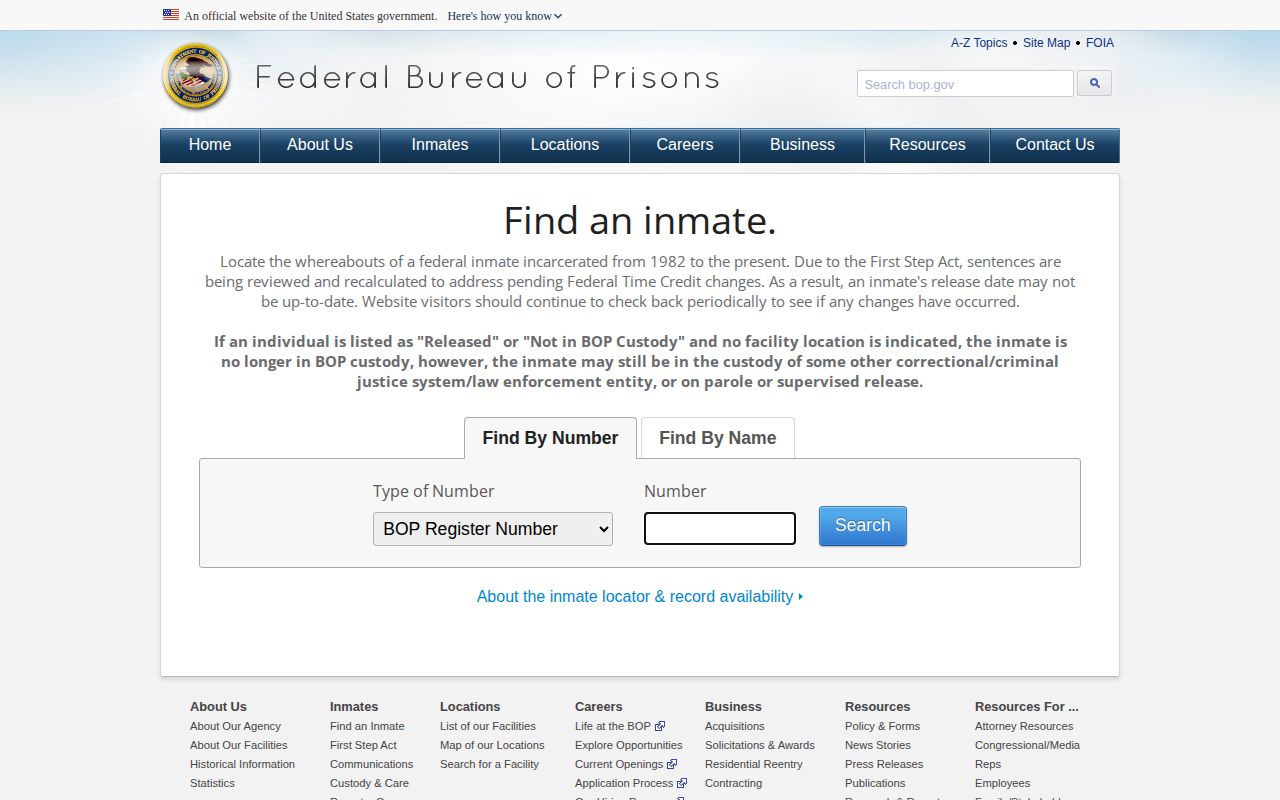
The federal lookup follows a separate custody path. It cannot confirm a county booking or replace the court case tied to a Kentucky arrest.
Kentucky Arrest Archives
A roster's visible time span is not the same as a retention period. KDLA sets schedules by records series. A jail can drop a recent-bookings row from public view and still keep the record under an approved schedule. When an old photo vanishes from a roster, that says nothing about the file itself. The agency may still hold it.
KSP's schedule names series 00042, the Mug Shot File. It carries a 20-year retention span and access limits tied to KRS 17.125 and 17.150. That rule governs custody, not public display. It creates no online photo archive. KDLA also keeps permanent historical prison registers plus the Crime Register spanning 1891 to 1926. Entries there can carry a name or number, date, crime, sentence, county, physical description, and discharge. A modern arrest-day booking photo is another matter.
The KDLA state retention schedules explain why an old-record request should name the agency. The series matters too. Local schedules vary. Lexington-Fayette, for instance, splits booking fingerprints and mug photos into separate series.
KDLA's archival holdings span paper and microfilm, with no statewide digitized run of booking mugshots. A register may document a prison term rather than the arrest itself. A county listed there can mark conviction location, not booking location.
Kentucky Arrest Archive Requests
For state-held records, KDLA's records request page gives you an online form and a mail route to its Archives Research Room in Frankfort. Research costs $20 in state and $25 out of state. Scans, copies, postage, and tax can add to that. Plan on four to six weeks. Name the agency, county, series, record sought, person, and date range.
Retention governs how long an agency keeps a record. It also sets when that agency may dispose of one. Expungement changes the official trail after the fact. A third-party copy may still need its own correction request once the agency acts.
Note: A historical register may document a prison term rather than a booking, and a public archive is not a full arrest-photo collection.